Showing posts with label keynote adventure speaker. Show all posts

Tuesday, May 29, 2018

On the Front Lines of the Ebola Epidemic

“It felt like being on a sinking ship,” Kidega says. “You can’t believe the fear.”

Some victims swarmed the hospitals, while others ran away in panic as nurses fell ill all around them. Even the rebels were spooked; the LRA released 40 prisoners, fearing that they might be carrying the virus.

When the trucks pull into Akwayugi, villagers look up from sifting maize and wheat. This isn’t as bad as Sub-Saharan Africa gets, but there’s serious squalor here. About a fifth of the children have the bulging bellies that indicate severe malnutrition.

The Red Cross volunteers divide into four-person teams and move through the village, asking questions of the small crowds that gather wherever they go: Did anyone have a fever? Did anyone have bloody diarrhea or vomit? Was there a sudden death?

The team has a “reintegration kit” for two girls who survived Ebola after they lost their mother to the disease. They find them with their father, Charles Odongo, outside the family’s round, mud-brick hut. Two weeks earlier, Odongo returned from the fields to find his wife in the hut with a headache and high fever. “It took six hours for the ambulance to get here,” he says. “And by the time they arrived, she had died.” When he sees the kit—cooking pots, blankets, soap, salt, and clothing—he smiles gratefully. “Immediately upon leaving for the hospital with my wife’s body, our things were burned by the neighbors,” he says.

Read the entire story here!

Thursday, April 26, 2018

The World’s Toughest Trucker

Garry grapples with the bucking Kenworth, plowing the rig through a sand berm at the bottom of the creek bed and into a motocrosser’s nightmare of boulders and hip-deep ruts. As the gully bottoms out there’s a nauseating crunch behind us, the sound of metal tearing apart. Fighting to maintain momentum, Garry stomps the throttle, downshifting twice a second as we bore into the soft sand. With each lower gear the engine roars an agonizing note, and the Dunlops burrow deeper. Overcome by grit and gravity, we bog to a stop. 

As the dust rises around us, Garry grabs his window crank to seal off the cab. The crank falls off in his hand.

“Bloody mongrel roads,” he growls.


The Top

Hidden under the rainforest canopy at the top of Australia's Cape York Peninsula, Pajinka Wilderness Lodge is a tropical retreat for wildlife lovers, bird watchers and fishermen. The lodge lies just short of the northernmost point in Australia, at the tip of a slender green finger that stretches up from the wide brown continent toward New Guinea. Locals call this spot simply The Top.

After a day in the sun deep-sea fishing with Pajinka's manager, Alan Geary, a few guests cooled off at the lodge's outdoor bar. Someone brought over a round of XXXX (Queensland’s home-brewed beer, pronounced “Four-X”) and asked Alan a question of essential interest:

In a place where the temperature rarely dips below 90 degrees, a place far too remote for electrical lines, how is it that the beer at Pajinka is always cold?

Read the entire story here!


Monday, April 9, 2018

Analog Kids in a Digital Age


As smartphones and social media become ever more ubiquitous and embedded, the love of nature—what E.O. Wilson called biophilia—is morphing into videophilia, a love of electronic media.

"We've quickly gone from a place where the average child would choose active outside activities to one where kids choose sedentary activities involving computers and smartphones and video," says conservation ecologist Patricia Zaradic. She and Oliver Pergams co-authored two studies that found that per capita visits to national parks and forests and other indicators of nature recreation have declined in developed countries since the late 1980s, due in large part to the increase in the amount of time spent on electronic media.

The trends they've identified have alarmed conservationists, whose efforts to protect wilderness depend on the support of people who connected with nature during their formative years. A rising generation of adults with little experience with wild places and little understanding of their value may ultimately have a greater impact on biodiversity and ecosystem health than bulldozers, invasive species, or even greenhouse-gas emissions, some think.

Read the entire story here.

Wednesday, March 28, 2018

Plugging Into Nature


I was at the campfire, flipping pancakes, when 13-year-old Ethan came over and asked if he could use my phone.

"I want to show those guys a YouTube video," he said, nodding toward his brother, Sam, and my sons, Charlie and Joe.

I looked up and arched an eyebrow. "Seriously, Ethan?" I said. "We all agreed this would be an electronics-free camping trip. Remember?"

"I know," he said, "but it's a video about camping."

Read the entire story here.

Tuesday, March 13, 2018

Laser Scans Reveal Maya "Megalopolis" Below Guatemalan Jungle


In a discovery that’s being hailed as a major breakthrough in Maya archaeology, researchers have identified the ruins of more than 60,000 houses, palaces, elevated highways, and other human-made features that were hidden for centuries under the jungles of Central America.

The vast, interconnected network of ancient cities in what is now northern Guatemala was home to millions more people than previously thought.

Scholars used a revolutionary technology known as LiDAR (short for “Light Detection and Ranging”), to digitally remove the tree canopy from aerial images of the now-unpopulated landscape, revealing the ruins of a sprawling pre-Columbian civilization that was far more complex and interconnected than most Maya specialists had supposed.

“The LiDAR images make it clear that this entire region was a settlement system whose scale and population density had been grossly underestimated,” said Thomas Garrison, an Ithaca College archaeologist and National Geographic Explorer who specializes in using digital technology for archaeological research.

Read the full story here.

Monday, October 30, 2017

The Yukon: Canada's Wild West


Shawn Ryan recalls the hungry years, before his first big strike.

The prospector and his family were living in a metal shack on the outskirts of Dawson, the Klondike boomtown that had declined to a ghostly remnant of its glory days. They had less than $300 and no running water or electricity. One night, as wind sneaked through gaps in the cladding, Ryan’s wife, Cathy Wood, worried aloud that their two children might even freeze to death.

Today the couple could buy—and heat—just about any house on Earth. Ryan’s discovery of what would eventually amount to billions of dollars’ worth of buried treasure has helped reinfect the Yukon with gold fever, and fortune seekers have stormed the Canadian territory in numbers not seen since the 1890s.

To read more about the reanimated gold rush in the Yukon, click here.


Wednesday, October 25, 2017

Canada's Wild West

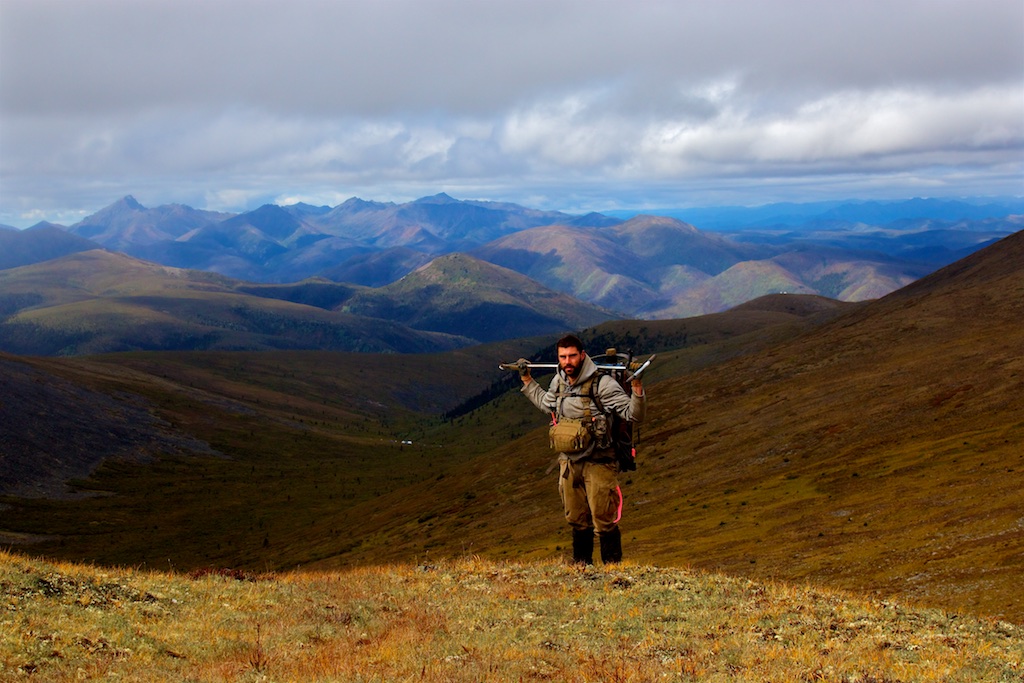
Author’s Note: The opportunity to travel through the far corners of the Yukon, reporting for National Geographic, was one of my dreams come true. As it turned out, it would be one of the most rugged and most fun assignments I’ve ever experienced. Over three weeks I would explore high ridges with gold prospectors, paddle through impossibly beautiful Arctic valleys with conservationists, and hunt caribou with some of the last hunter-gatherers on the continent.

The Yukon, with its brawling, big-mountain physicality, is one of those places that tugs on adventurous imaginations. It’s also one of those places that tends to draw passionate people with passionate opinions. The debates that have overtaken Canada’s Far North are emblematic of the tension that runs through many of the world’s still-unspoiled places—between those who would keep it wild, and those whose success depends on digging it up.

I came back with mountains of material—enough notes and photographs to fortify four magazine stories (including this one) and enliven a dozen keynote talks. As for the debate over the future of North America’s last great wilderness, it is still far from settled.
Read more about Tom's trip to the Yukon, here.

Author, photojournalist and National Geographic speaker Tom Clynes travels the world covering the adventurous sides of science, the environment and education. His work appears in publications such as National Geographic, The New York Times, Nature, Popular Science, and The Atlantic. As a keynote speaker, Tom inspires audiences and brings them along “on assignment” to fascinating locations around the globe. Whether your group or organization is in search of adventure speakers, environmental speakers or your own in-house “National Geographic speaker series,” Tom’s presentations will earn high praise. To contact Tom and find out more about his memorable and inspiring programs, email info[at]tomclynes.com. 

Tuesday, October 17, 2017

The Virus Hunter

national geographic, national geographic speaker, adventure keynote speaker, adventure speaker, environment speaker, keynote speaker

Author’s note: I often include this story in my keynote presentations. In terms of intrigue, it’s got just about everything: an exotic location, scary diseases and a protagonist whose efforts may very well prevent the next smallpox or Ebola from gaining a foothold in human bloodstreams. On my journey with Nathan Wolfe and his team into the very jungle that produced the HIV virus, I could see how logging and bush-meat hunting is bringing humans deeper into once-isolated regions that have a history of spawning deadly pandemics. Meanwhile, society has stacked the decks in favor of opportunistic microbes, with our closely packed cities, our changing climate and our growing numbers of elderly. Like many of the world-changers I’ve met, Wolfe has the conviction and tenacity to follow through in the face of challenges that would turn back most others. This is one of the most logistically challenging environments on earth, but as Wolfe tells his team, “If nothing is going wrong, it means we’re not asking tough enough questions.” 


Author, photojournalist and National Geographic photographer speaker Tom Clynes travels the world covering the adventurous sides of science, the environment and education. His work appears in publications such as National Geographic, The New York Times, Nature, Popular Science and The Atlantic. As a keynote speaker, Tom aims inspires audiences and brings them along “on assignment” to exotic locations around the globe. To contact Tom and find out more about his memorable and inspiring programs, email info[at]tomclynes.com.

Friday, September 22, 2017

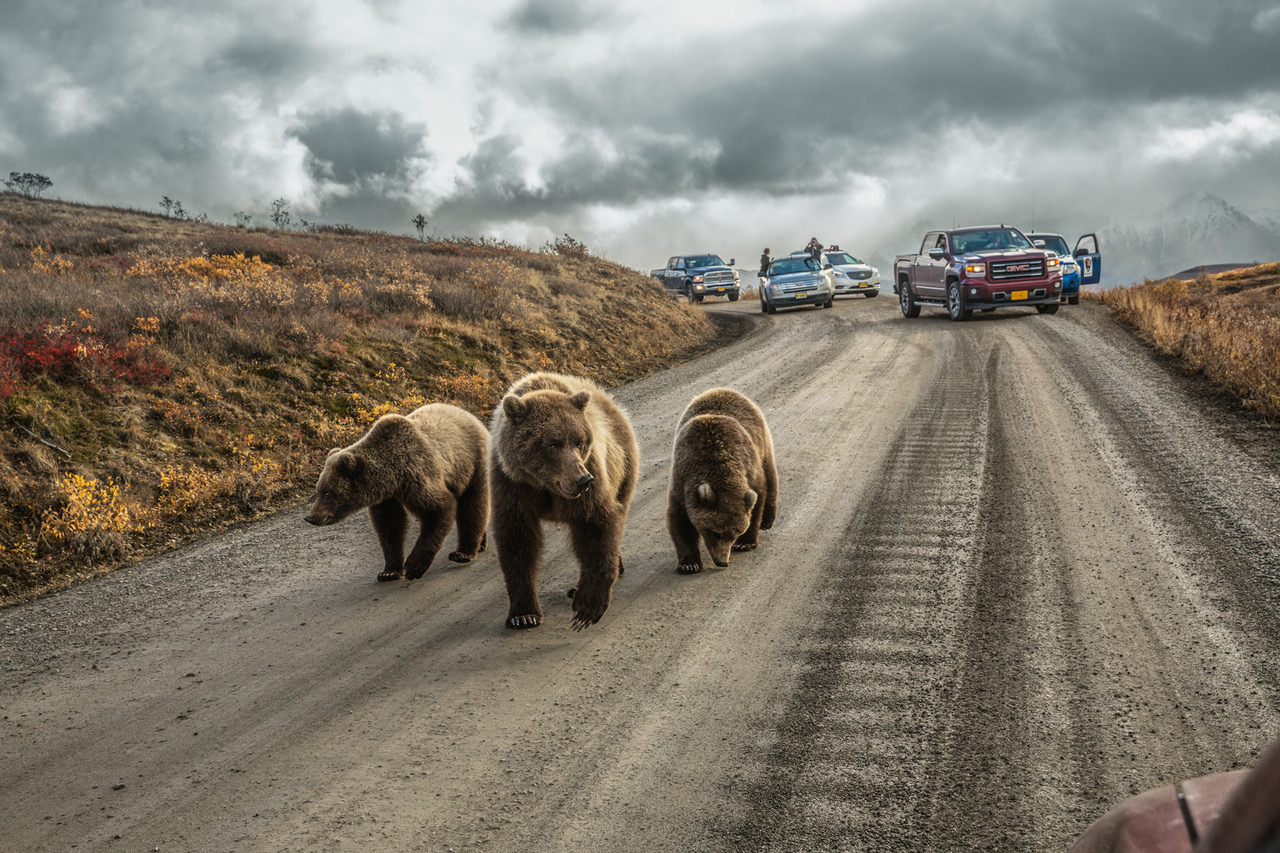
How Can Six Million Acres at Denali Still Not Be Enough?


After a half-year of brainstorming about National Geographic’s yearlong celebration of America’s national parks, the magazine’s editors offered me the pick of the litter. 

The choice was easy. Denali National Park, the crown jewel of America’s park system, offered a range of possibilities broad enough to be a world unto itself. It also offered some formidable challenges. I quickly realized that the normal conventions of outdoor reporting wouldn’t cut it in this nearly roadless six-million-acre wilderness. 

 I would spend a total of five weeks walking, skiing, flying and dog-sledding through the park’s spectacular terrain, during the extremes of the Alaskan winter and summer. These explorations yielded enough stories and pictures and controversies to a fill a dozen notebooks and data cards. 

In the end, only a small fraction of this material would fit into NatGeo’s 28-page feature story, leaving plenty of adventures to share for the first time with audiences at my upcoming talks and presentations.

Click here to read the story. 


Author, photographer, journalist and keynote speaker Tom Clynes travels the world covering the adventurous sides of science, the environment and education. His work appears in publications such as National Geographic, The New York Times, Nature, and Popular Science. As a keynote speaker, Tom helps organizations stimulate action and involvement, bringing audiences along “on assignment” to the ends of the Earth. These authentic and visually stunning presentations offer a high-intrigue, high-energy way to catalyze creativity and engagement. To find out more about his memorable and inspiring programs, contact Tom at info[at]tomclynes.com.

On the Front Lines of the Ebola Epidemic

“It felt like being on a sinking ship,” Kidega says. “You can’t believe the fear.” Some victims swarmed the hospitals, while others ran ...